25 - 02 - 2026
When technology becomes language
When 3D stops being “new” and becomes “right”
In recent years, 3D has often been framed as a promise: a laboratory technology, something experimental, rooted in R&D. Fascinating and powerful, yet not fully usable for the average audience. From 2026 onward, this scenario has begun to change in a visible way.
Today, real-time three-dimensional experiences are no longer style exercises or niche indulgences. They have become mature tools, understandable and internalized by an increasingly broad segment of digitally evolved users. This shift is not sudden; it is the result of more powerful devices, more stable browsers, stronger GPUs, and a digital culture that has now absorbed new interaction paradigms.
Users know how to explore, move through, and observe a three-dimensional space. They expect responsiveness. They can distinguish between a self-serving “wow effect” and an experience designed with intention.
This does not mean that any 3D experience works, nor that 3D is always the right choice.
When 3D becomes language
The turning point is not technological, but design-driven.
A 3D experience works when it stops trying to impress and starts to tell a story, when technology becomes language rather than the protagonist. Today, the real question is not whether to use 3D, but when to use it, and, above all, when not to.
Poorly designed 3D slows things down, distracts, and distances. Well-designed 3D guides, engages, and endures.
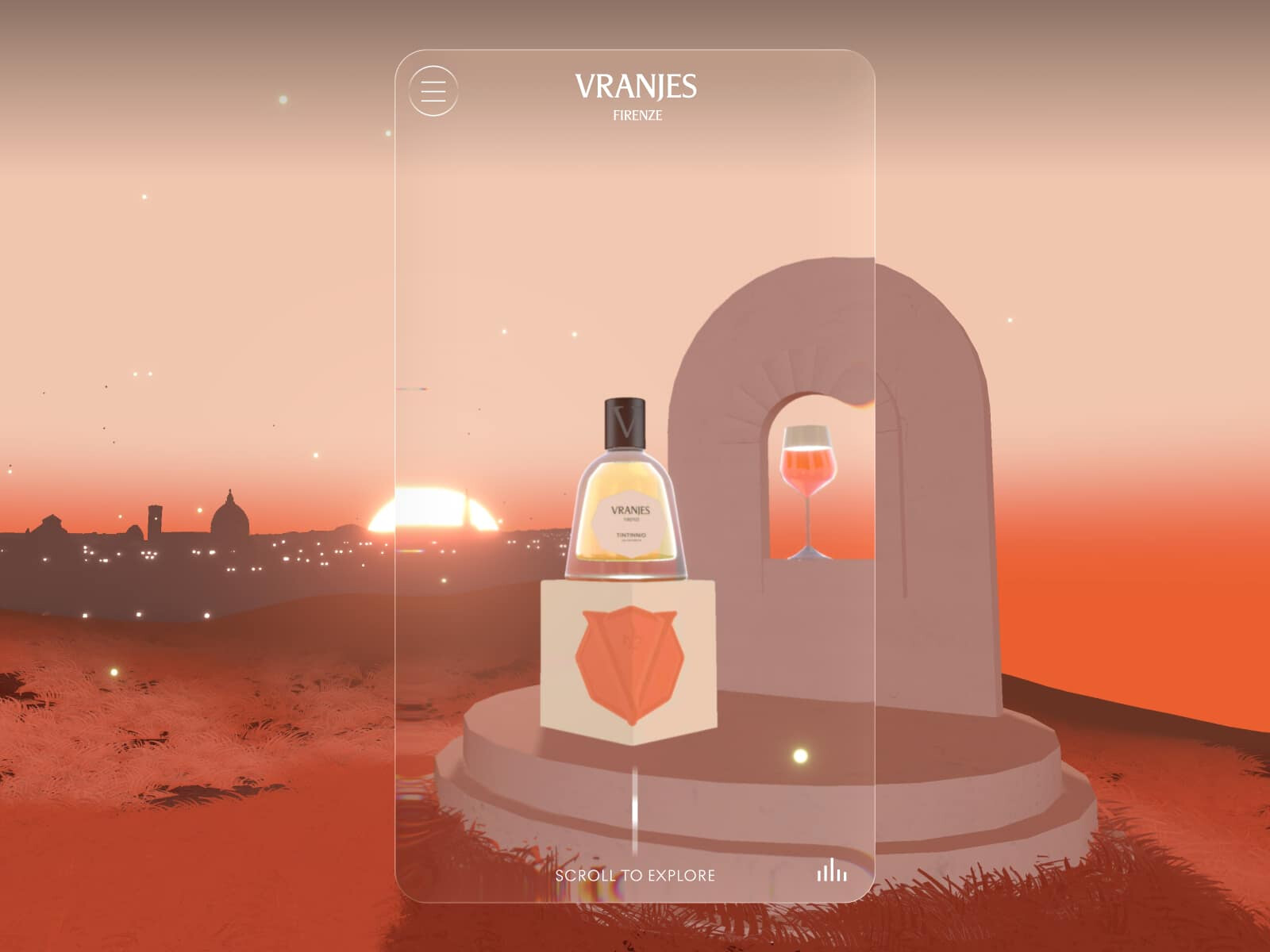
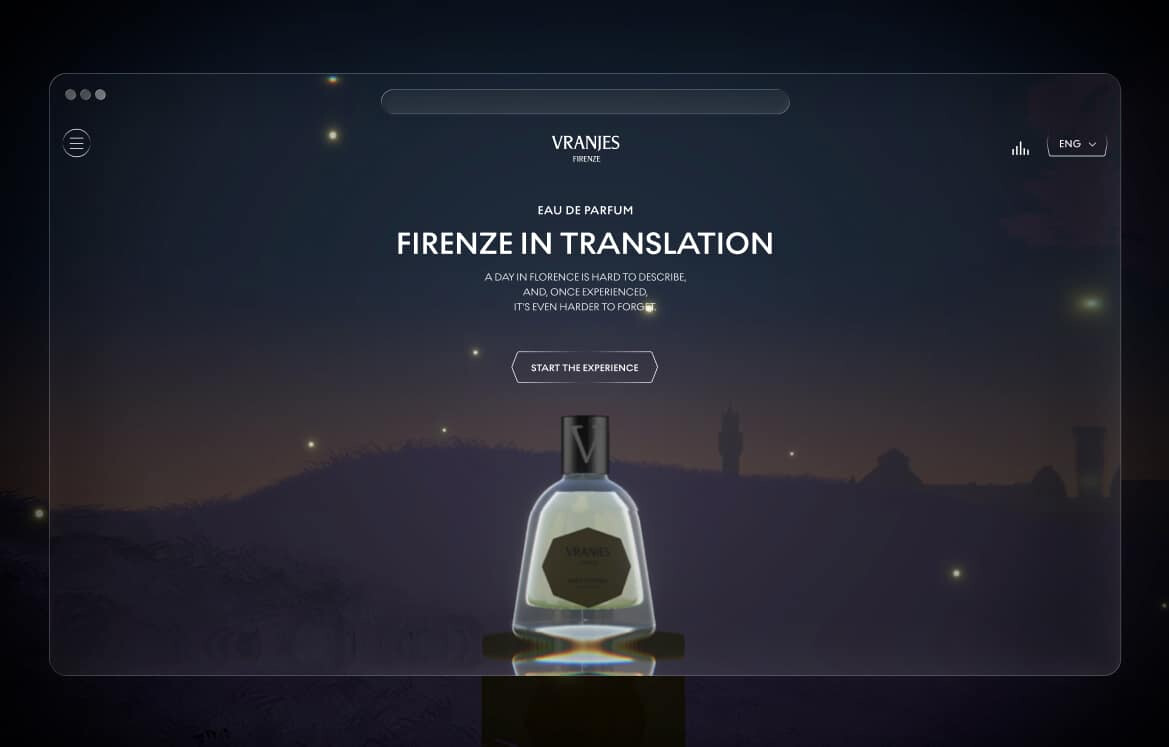
It is within this reflection that Firenze in Translation was born, the project created by WE RAD for Vranjes Firenze, conceived to present the new Eau de Parfum collection through an immersive digital experience.
Firenze in Translation: a multisensory experience
Eight fragrances, one city, one single day.
From sunrise over the Tuscan hills to the vibrant Florentine night, each scent has been translated into a real-time, explorable digital space. Not a simple landing page, but a living environment designed to be crossed and experienced.
A pulsating three-dimensional world made of reactive particles, dynamic lighting, ever-shifting shadows, and natural elements that respond to space and time. A digital ecosystem powered by a custom system capable of monitoring performance and dynamically adapting effects and complexity, ensuring the best possible experience across different devices.
It is in the invisible details, such as real-time particle adaptation or dynamic graphic complexity management, that an experience truly becomes accessible.
Vranjes Firenze in Translation is a project by WE RAD for Vranjes Firenze.
The Right Thing Over The New Thing
This project also represents a synthesis of WE RAD’s way of working.
The Right Thing Over The New Thing is not a rejection of innovation.
It is a position.
It means choosing the right solution - even when it isn’t the newest, the loudest, or the most requested.
Technology is never neutral. It is always a choice.
Today, the role of a partner is not to simply execute a request, but to listen, understand the context, and design the most effective strategy possible.
3D only works when UX, web development, storytelling, art direction, and strategic vision operate together.
Knowing how to use a technology is not enough. You need to know why you are using it.
Recognition and validation
The quality of a project is not measured solely by its visual impact, but also by the recognition of the international community that every day observes, analyzes, and rewards the best digital experiences.
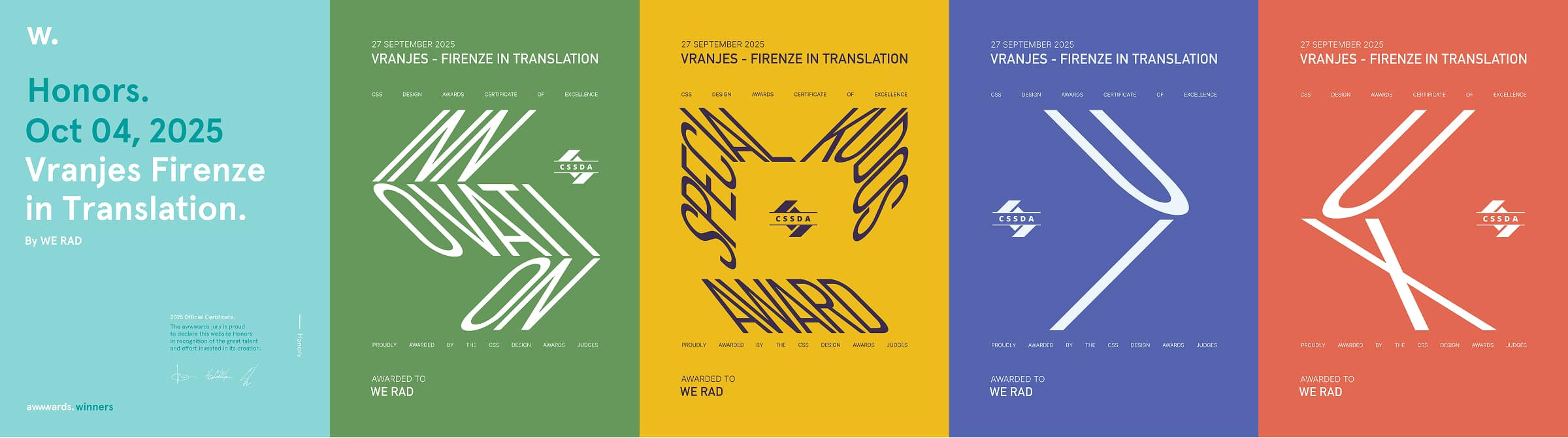
Firenze in Translation has received recognition from Awwwards and The CSS Awards - platforms that represent a global benchmark for design, innovation, and excellence in web experience.
Awards that do not celebrate technology for its own sake, but rather the ability to use it consciously, accessibly, and coherently with the brand’s message.
A Look Beyond the Screen
Looking ahead, it is clear that exploring three-dimensional spaces will become increasingly central. Augmented reality, wearables, spatial computing headsets, and new gestures introduced by smartwatches and smart rings are gradually redefining how we interact with digital content.
These tools have not yet become commonplace in every household, but the direction is clear. Lighter, more intuitive devices are lowering the barrier to access for these types of experiences.
Now is precisely the moment when 3D is mature enough to be usable, yet still capable of surprising - making it meaningful to invest in it wisely.
Not to chase the new.
But to create experiences that truly make sense.

View Project